Fire Door Compliance in London: Why the Whole Doorset Matters
Fire door compliance depends on the complete doorset. Learn how planned inspection and targeted remediation can help London property managers make informed decisions.
The Legal Framework for Fire Safety in London
The Fire Safety Act 2021 and Building Safety Act 2022 form part of the wider legal framework that responsible persons must understand when managing fire safety in relevant buildings. A fire door is not simply a piece of joinery: it is a doorset designed to support compartmentation and protect escape routes.
The first step is to understand what has actually been fitted, how it is performing, and whether a defect is isolated or affects the wider assembly. Competence, the agreed specification and clear records matter throughout that process.
Why the Complete Doorset Matters
The leaf, frame, seals, hinges, self-closing device, glazing and ironmongery work together. Changing one component without checking its compatibility with the doorset can undermine the intended fire and smoke performance.
For property managers, the practical objective is a clear record of the door reference, observed condition, agreed scope of work and post-work information retained for the building file.
Key Elements of a Compliant Fire Door:
- The Door Leaf: The identified FD30 or FD60 leaf and its condition.
- Intumescent Strips: Fitted to the frame or door edge to expand under heat, sealing gaps against smoke.
- Compatible Hardware: Hinges, closers and locks should suit the documented doorset specification.
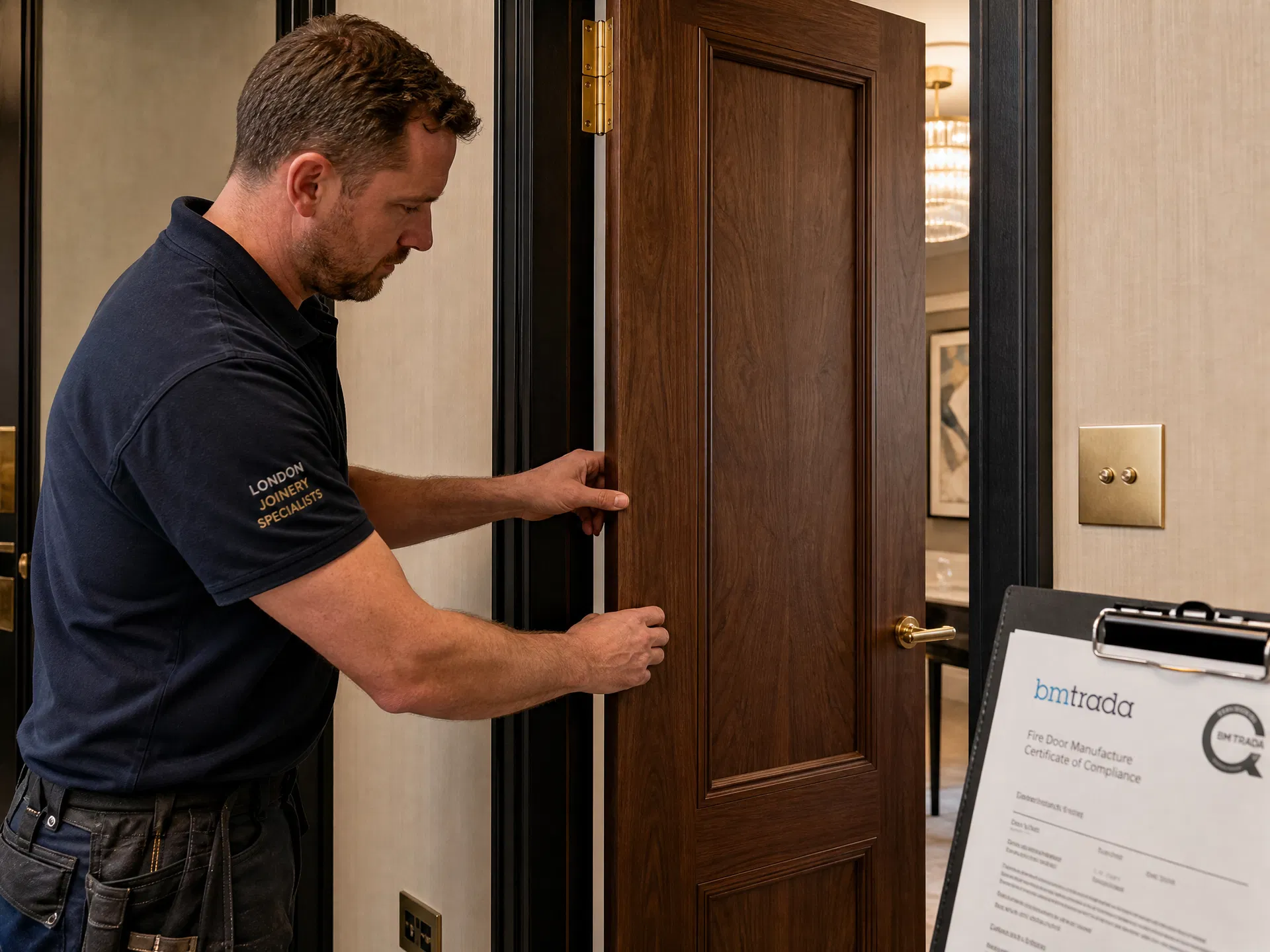
- Frame & Gaps: The gap between the door leaf and frame must strictly be between 2mm and 4mm.
FD30 vs. FD60 Timber Fire Door Repairs & Remediation
In many cases, a fire door does not require a full replacement. Minor non-compliances can sometimes be resolved through targeted fire door remediation in London. The appropriate approach depends on the door's condition, the available specification information and the nature of the defect.
Common remediation works can include:
- Re-hanging doors to correct excessive gaps (over 4mm).
- Replacing damaged or missing intumescent smoke seals.
- Upgrading non-compliant self-closing devices.
- Targeted repair work to communal or residential doors where the agreed scope supports it.
Planned Fire Door Inspection & Maintenance
Fire doors are subject to wear and tear, especially in high-traffic commercial or communal residential areas. A planned fire door inspection and maintenance in London programme helps responsible persons identify defects, prioritise appropriate action and keep useful records.
| Inspection Item | What to check | Common issue |
|---|---|---|
| Gaps (Top & Sides) | Measured against the documented doorset detail | Excessive or inconsistent gaps |
| Threshold Gap | Suitability for the door and any installed seals | Excessive clearance at floor level |
| Self-Closer | The door closes and latches as intended | Door sticking or failing to latch |
| Hinges | Condition and compatibility with the doorset | Worn, damaged or unsuitable hinges |
If you need a fire door inspection, remediation scope or installation discussion for a London property, contact Effingham Construction to review the project requirements. See the dedicated fire door installation, fire door repairs and fire door inspection service pages for further scope information.