Landlord Mould Compliance & Damp Remediation in London Flats
Damp and mould require a prompt, evidence-led response. Learn how to investigate the moisture source, plan remediation and understand the relevant housing responsibilities.
The Legal Imperative: Landlord Mould Compliance
Damp and mould can present a serious health and housing-quality issue and should be addressed promptly. The relevant duties and remedies differ by tenure, property condition and the facts of the case; property owners should take appropriate legal or professional advice where needed.
In England, Awaab’s Law introduced phased repair timeframes for significant damp-and-mould hazards in the social rented sector from 27 October 2025. It is not a blanket private-rented-sector timetable. For every tenure, the practical starting point is to investigate the moisture source, record the findings, make the property safe where necessary and plan an appropriate repair and follow-up.
The Root Causes of Damp and Mould in London Flats
London’s historic building stock, combined with modern double-glazing and inadequate ventilation, can contribute to condensation and damp. Some mould types may present health risks, particularly for people who are more vulnerable, so the cause and extent of the issue should be assessed without delay.
Effective flat damp and mould remediation requires identifying and correcting the root cause of the moisture:
- Penetrating Damp: Water entering from the outside through brickwork defects, failed pointing, or leaking gutters.
- Rising Damp: Moisture drawn up from the ground due to a breached or missing damp-proof course (DPC).
- Condensation: High humidity levels inside the flat caused by cooking, washing, and poor mechanical ventilation.
Our Professional Mould Clearance Process
Effingham Construction’s approach starts with the moisture source and the condition of the affected materials. Surface treatment alone is not a reliable long-term solution when water ingress, condensation or a ventilation issue remains unresolved:
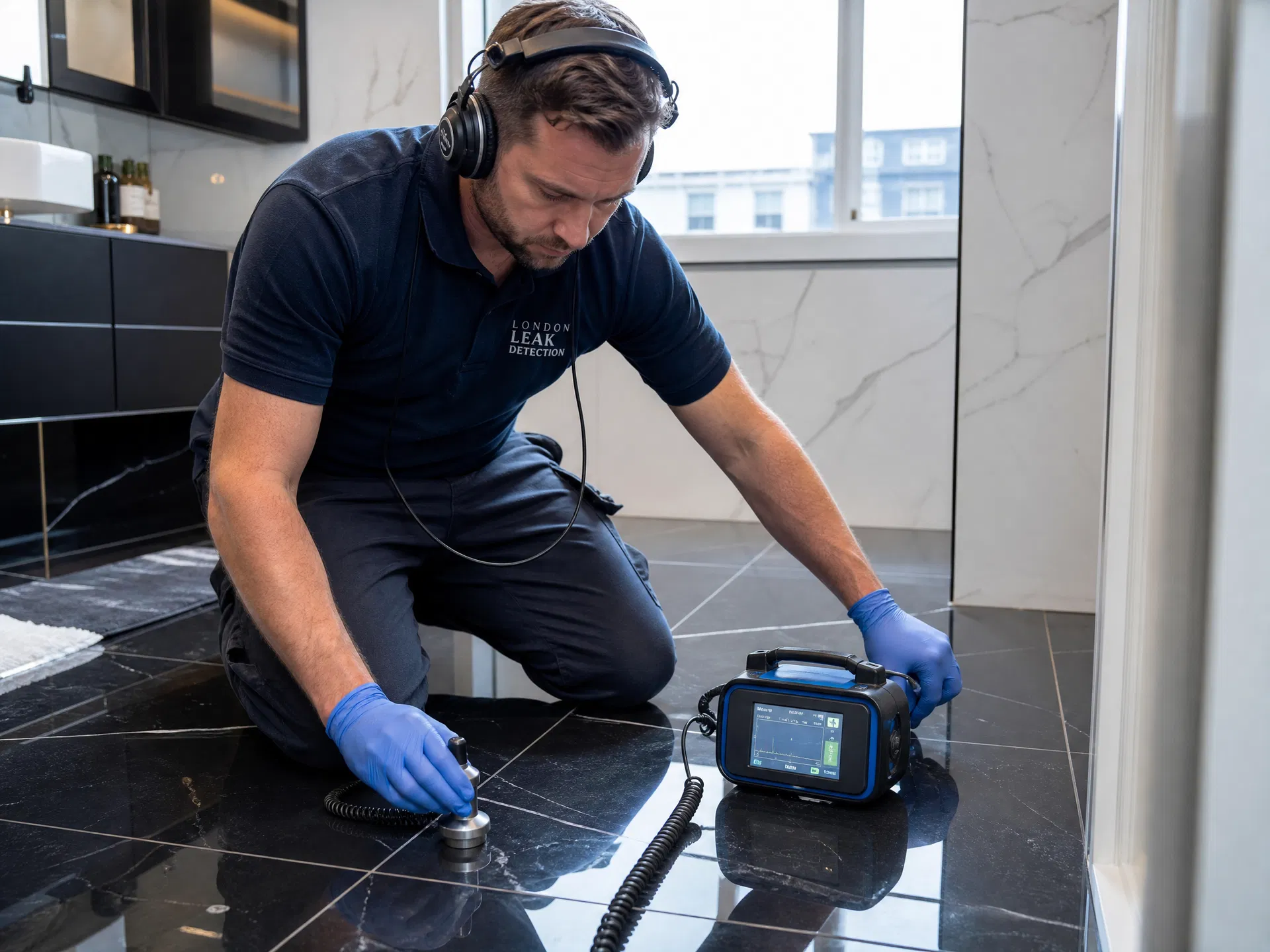
- Thermal & Moisture Mapping: Using advanced moisture meters and thermal cameras to identify the exact source of water ingress.
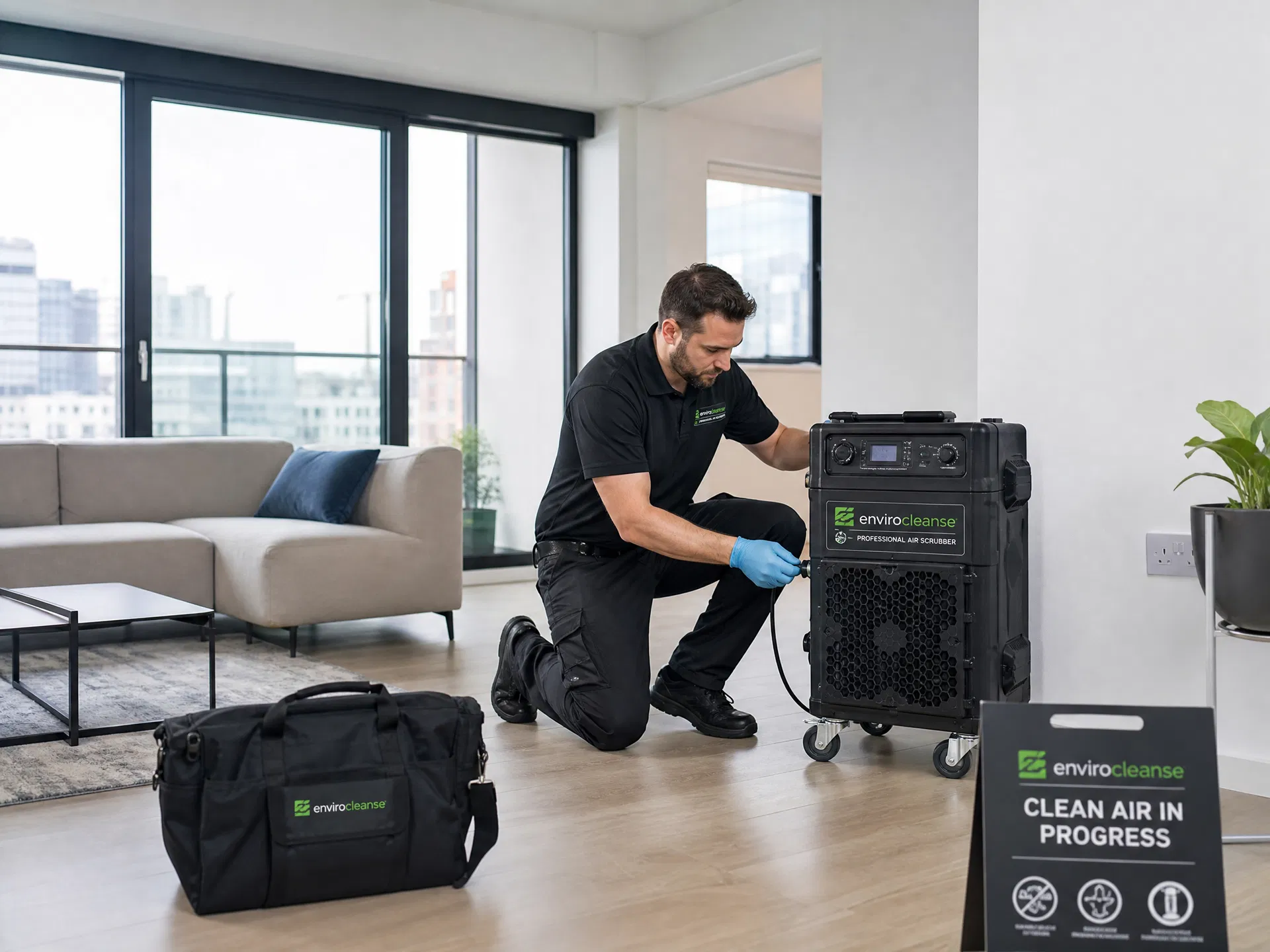
- Air Scrubbing & HEPA Filtration: Deploying industrial-grade air scrubbers to capture airborne mould spores and prevent cross-contamination.
- Fungicidal Treatment: Applying a treatment method appropriate to the identified materials and moisture source.
- Ventilation Upgrades: Installing continuous mechanical extract ventilation (dMEV) and positive input ventilation (PIV) systems to permanently control indoor humidity.
Commercial Mould Clearance for Block Managers
For block managers and housing associations, mould outbreaks can quickly spread across multiple units, leading to widespread tenant complaints and structural degradation.
| Remediation Step | Action Taken | Project Record |
|---|---|---|
| 1. Diagnostics | Moisture testing & thermal mapping | Damp & Moisture Survey Report |
| 2. Containment | HEPA air scrubbing & isolation | Air Quality Verification |
| 3. Eradication | Biocidal treatment & plaster repair | Completion record |
| 4. Prevention | PIV/dMEV mechanical ventilation | Recommendations for the property file |
Protect your tenants' health and secure your property assets. Contact Effingham Construction today to schedule a professional damp and mould survey or discuss the appropriate remediation scope.