Fire Door Remediation or Replacement? What Property Teams Should Check First
Replacement is not the automatic answer to every fire-door observation. This decision guide helps property teams gather the right facts, protect the evidence trail and define an appropriate next step without turning an initial check into a technical conclusion.
The short answer: define the condition before you define the remedy
A fire-door observation should lead to a controlled decision process, not an automatic repair or replacement instruction. The visible condition, the wider doorset, the building’s fire-safety arrangements and the available evidence all matter.
This is a practical property-team decision guide, not a fire risk assessment, a fire-door inspection report or competent-person advice. It does not determine whether an individual door is suitable, compliant, repairable or due for replacement. The Responsible Person and relevant competent advisers should consider the particular building, risk assessment, door history and required scope before work is agreed.
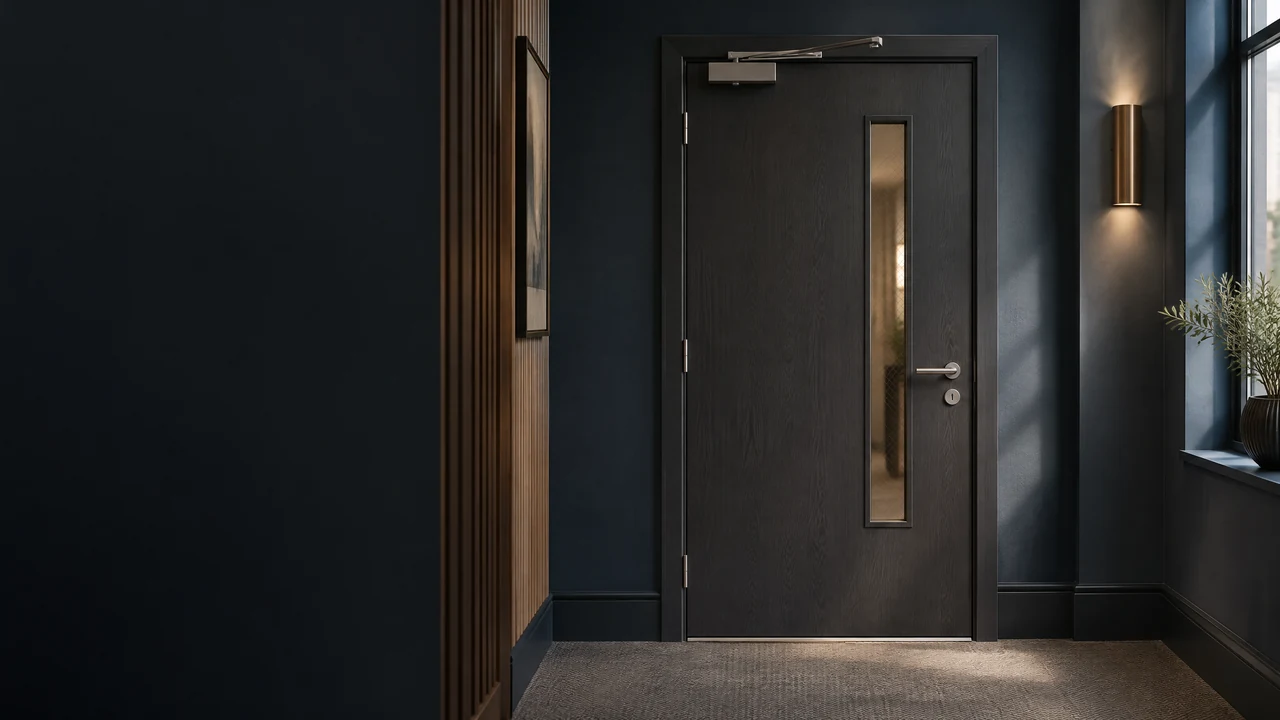
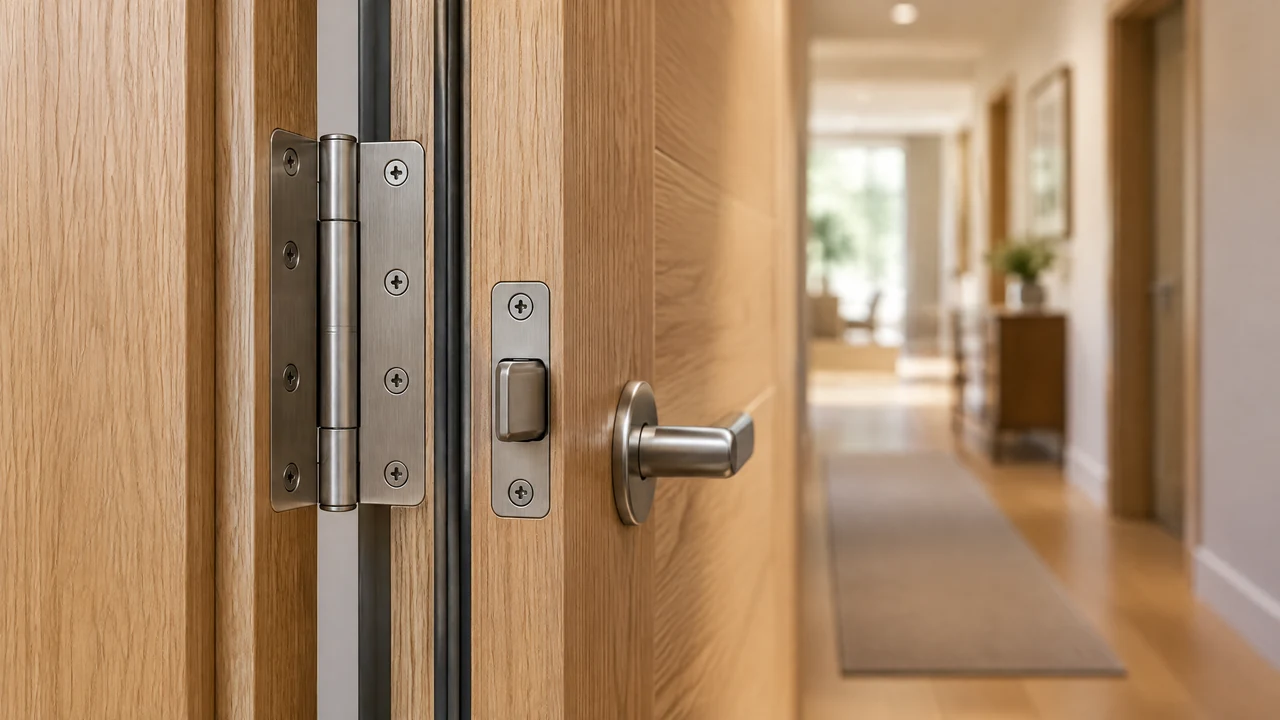
All images in this guide are original illustrative scenes, not photographs of Effingham Construction projects or client properties.
1. Replacement is not the default outcome
The Government’s fire-door fact sheet explains that, where faults are found, appropriate maintenance may be needed to keep a door fit for purpose and replacement may be needed where appropriate. It also makes an important distinction: there is no requirement to replace a fire door solely because it does not meet the current Building Regulations standard if it remains in full working order from a fire-safety perspective.
That is not a shortcut to retain every existing door. It is a reason to avoid jumping from one observation to a specification. A door may need a targeted remedy, a more detailed assessment, a defined replacement scope or another action that sits within the building’s wider fire-safety process.
| Question before an instruction is raised | Why it changes the next step |
|---|---|
| What has actually been observed? | A report should separate a visible condition from an assumed cause or technical conclusion. |
| Which door and location are involved? | Flat entrance, communal and other doors can sit within different access, management and fire-safety arrangements. |
| Is there a current record or prior scope? | Previous findings, drawings, maintenance records and risk-assessment actions can provide essential context. |
| Is the observation isolated or repeated? | Repeated reports may indicate a broader maintenance, specification or access issue that needs coordinated review. |
| Who owns the next decision? | The Responsible Person and relevant advisers retain responsibility for fire-safety decisions; a contractor’s initial observations should be recorded accurately and escalated through the agreed route. |
Illustrative image: A generic residential corridor doorset. It is not a site photograph and does not show a tested or specified door assembly.
2. Start with the doorset, not a single component
A fire door is part of a wider doorset. An instruction based only on a photograph of one hinge, a closer or a gap can omit the information needed to understand the condition in context.
For basic checks, the Government fact sheet identifies visible areas a Responsible Person may consider, including damage, glazing apertures or air-transfer grilles, gaps around the frame, seals and hinges, self-closing devices and whether the door closes correctly around the frame. These are useful prompts for an evidence record; they are not a substitute for the appropriate level of inspection or risk assessment.
A practical evidence record
Where it is safe and permitted to do so, record the following in the instruction or handover:
- Exact location and door reference: building, level, corridor or flat reference as appropriate, without relying on a vague description such as “the lobby door”.
- Condition observed: factual notes on the door leaf, frame, hardware, closer, glazing, grille, seals or closing action; avoid describing the result as compliant or non-compliant unless that conclusion comes from the relevant competent process.
- Date, reporter and access outcome: who raised the item, when it was seen and whether access was achieved or declined.
- Supporting evidence: photographs, prior work orders, door schedules, risk-assessment actions or manufacturer/system information if it is already held by the building team.
- Immediate route: who has been notified, what temporary controls have been agreed by the appropriate decision-maker and whether a further assessment is needed.
Illustrative image: A generic close-up of door hardware. It does not establish the rating, specification, condition or suitability of any real doorset.
3. Keep observation, assessment and scope as separate steps
Property teams often need to move quickly, especially when residents, managing agents and maintenance teams are coordinating access. The most reliable way to stay clear is to keep three stages separate:
- Observation: What was reported or seen, by whom and where?
- Assessment: Who is responsible for determining the condition, relevant risk and required action?
- Delivery scope: What work is agreed, to what specification, with what records, protection and access arrangements?
This separation avoids a common problem: an initial call-out note becoming an untested repair specification. It also gives the team a clearer audit trail if priorities change or a broader review is needed.
For qualifying multi-occupied residential buildings in England, the Fire Safety (England) Regulations 2022 set out particular check requirements for Responsible Persons. The fact sheet states that buildings over 11 metres have quarterly communal-door checks and best-endeavours annual flat-entrance-door checks, alongside resident-information duties for relevant multi-occupied residential buildings. The applicable duties and operational route must be confirmed for the particular building; this article is not a legal interpretation.
4. Build the scope around the information that survives handover
Whether the eventual instruction is remedial work, a further check or replacement, the project record should make the outcome understandable to the next person involved. A useful scope normally identifies the exact door, agreed work boundary, access route, required protection of common parts and the evidence that needs to be returned at completion.
| Scope-control prompt | Detail to agree before work starts |
|---|---|
| Work boundary | Which component or doorset is in scope, what is explicitly outside scope and which condition would trigger a return to the decision-maker? |
| Access and resident communication | Who arranges access, what notice is required and what happens if access is not achieved? |
| Materials and specification | What information has been issued or verified for the agreed scope? Do not substitute a generic assumption for project-specific evidence. |
| Completion record | What photos, work notes, product information or handover information are required by the client’s process? |
| Follow-on action | Does the finding need a wider programme, fire-risk-assessment review, resident communication or another planned-maintenance action? |
Illustrative image: A generic record-keeping scene. It contains no real project documents, measurements or certification evidence.

5. A short decision route for property teams
- Capture the report accurately. Record where it is, what was observed and any access or resident context.
- Avoid a premature conclusion. An initial observation does not by itself establish repairability, fire performance or replacement need.
- Route the item through the building’s process. Make sure the Responsible Person and relevant competent advisers receive the information needed for the next decision.
- Agree a defined scope. Once a delivery route is set, identify the specific work boundary, access arrangements, specification information and completion record.
- Close the loop. Record work completed and any follow-on action so repeated concerns do not become disconnected call-outs.
How Effingham Construction can support a defined remedial scope
Effingham Construction can discuss practical fire door repair, installation and inspection and maintenance support where there is an agreed project instruction. The appropriate doorset system, detail, records and wider fire-safety decision should be confirmed in writing for the particular building before work begins.
For broader context, see our related guide: Fire Door Compliance in London: Why the Whole Doorset Matters.